The MONEY PLAY is HERE - Money done for you.
Become an O8 Affiliate – Earn 20% commission on all sales.
You Hired Someone to Do This Work. Why Are You Still Doing It?
You hired someone. Trained them. Gave them the job.
And yet here you are, two hours into your evening, fixing the same thing they were supposed to handle. Again.
You're not bad at delegating. You're stuck in a cycle that keeps you doing work you already paid someone else to do.
Let's name the excuses keeping you there.
Excuse #1: "It's Faster If I Just Do It Myself"
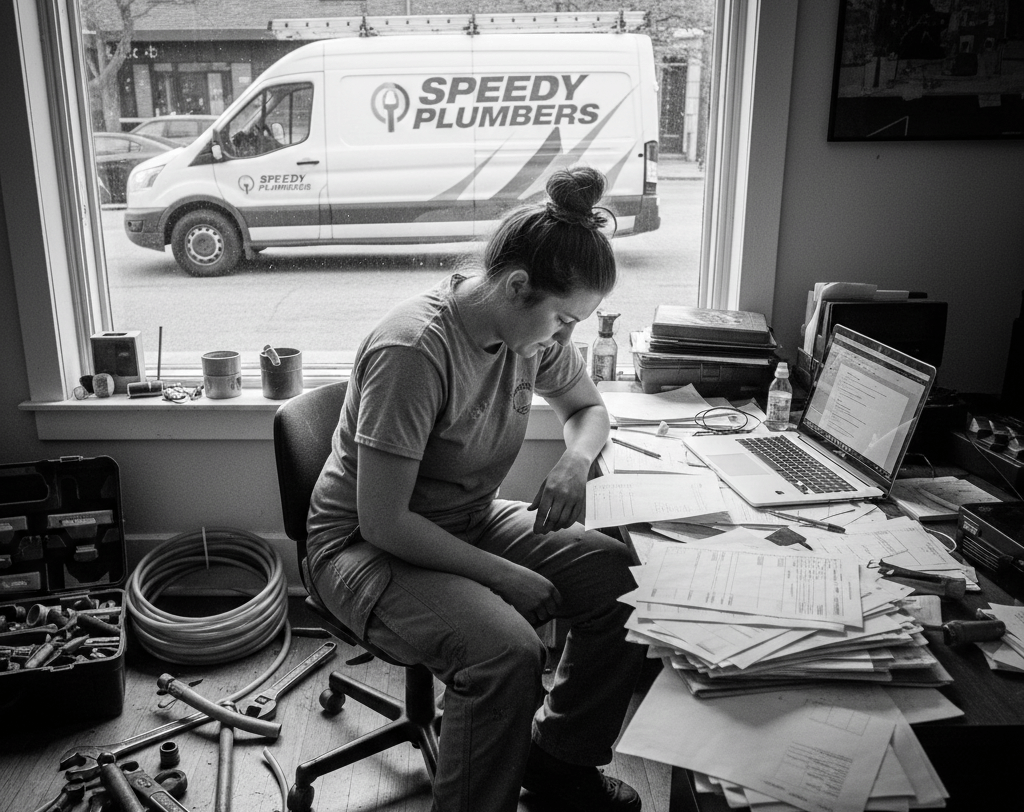
Sarah runs a plumbing business. She hired an admin to handle scheduling and invoicing two years ago.
She still does both. Every week.
Why? Because showing someone how to update the schedule "takes too long." Explaining how to handle a late invoice is "faster if I just do it."
So she does it. Over and over. Ten hours a week on tasks she hired someone else to handle.
Let's do the math:
10 hours/week on admin work
50 weeks/year = 500 hours
Her effective hourly rate as owner: $80/hour
Cost of doing it herself: $40,000/year
Sarah spends 10 hours a week doing work she hired someone else to do. That's $40,000 a year spent redoing the same tasks.
Mike Michalowicz puts it plainly:
"You cannot scale your business if that means that you do most (or even some) of the work."
She's profitable. She's busy. She's trapped.
"It's faster" is only true once. The second time? That's a choice to stay trapped.
Michael Gerber said it decades ago: "If your business depends on you, you don't own a business—you have a job. And it's the worst job in the world because you're working for a lunatic!"
Excuse #2: "They Won't Do It As Well As I Do"
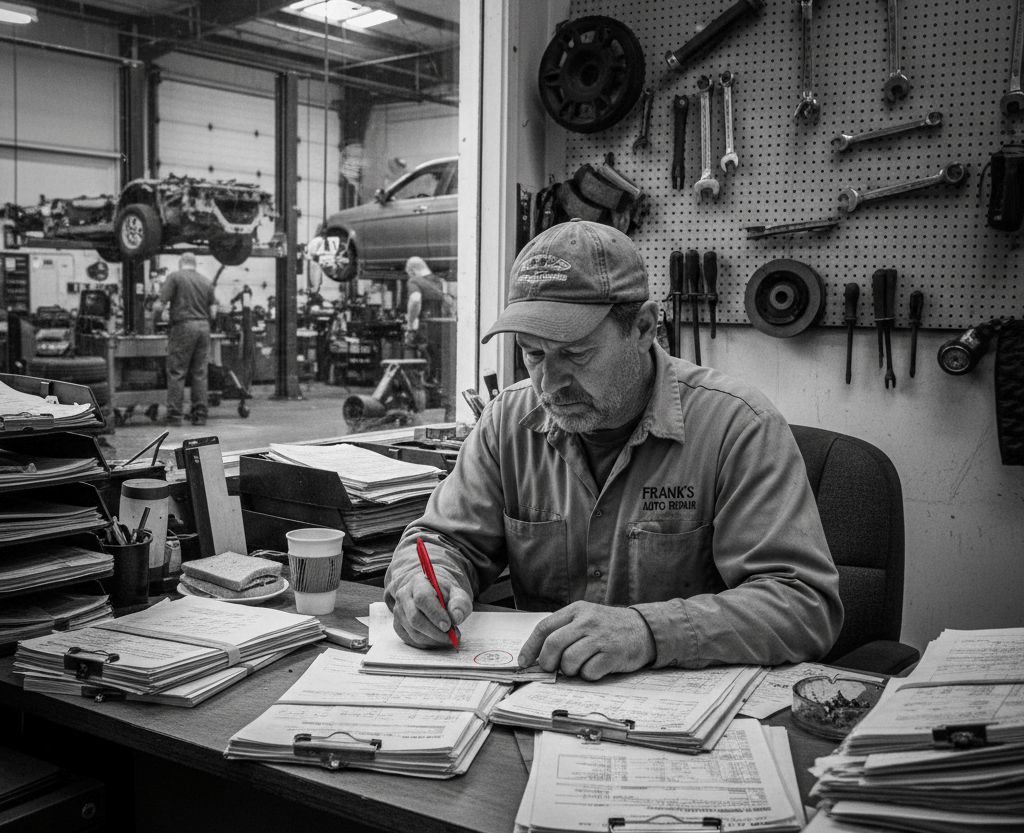
Mark owns three auto shops. He has a service manager at each location.
He still writes every estimate. Checks every invoice. Reviews every repair order.
Because "they don't catch the details like I do."
He's right. They don't.
Not because they can't. Because he never gave them a system that shows them what details matter.
He gave them a title and expected them to read his mind.
Gerber nailed this in The E-Myth:
"Most entrepreneurs fail because you are working IN your business rather than ON your business."
Mark's not building managers. He's building dependencies.
His staff will never care like he does. That's not a failure—that's reality. They have jobs. He has a mission.
The fix isn't hiring people who care more. It's building systems that don't require caring to work correctly.
As Gerber put it: "How can I create a business whose results are systems-dependent rather than people-dependent?"
Excuse #3: "I Don't Have Time to Train Them"

Lisa owns a marketing agency. She hired a project manager six months ago.
She still runs every client call. Still reviews every deliverable. Still handles every escalation.
"I don't have time to show her how to do it."
Translation: She doesn't have time NOT to do the work herself.
So she stays buried doing $25/hour work while ignoring $500/hour decisions.
Every week she "doesn't have time" to train costs her another week of doing work she already hired someone else to do.
Gerber was direct about this:
"Organize around business functions, not people. Build systems within each business function. Let the systems run the business and the people run the systems."
Lisa needs two hours to document how client calls work. That's it.
Instead, she's spending 10 hours a week running them herself.
That's not time management. That's avoidance.
Excuse #4: "I Can't Trust Them With This"

James runs a construction company. He has a foreman. He doesn't let him order materials.
"He'll order the wrong thing. Or pay too much. Or miss the delivery window."
Maybe. Or maybe James never showed him which suppliers to use, what specs matter, or how to track deliveries.
James built a job title, not a system.
His foreman can't be trusted because James never gave him anything trustworthy to follow.
Gerber said it clearly:
"The system runs the business. The people run the system."
No system? No trust. Not because the person's unreliable—because there's nothing reliable for them to follow.
The Real Problem
Your staff will never care like you do.
Stop hiring for passion. Build systems people can follow.
You don't need someone who thinks like you. You need processes that work without you having to think at all.
Every time you redo work they should have done, you're not helping. You're teaching them you'll do it if they wait long enough.
What Systems Actually Look Like
Systems aren't complicated. David Jenyns says it straight: "Just 20 per cent of the systems you create will provide 80 per cent of your efficiency wins."
You don't need to document everything. Start with what's eating your time:
Checklists they can complete. Not vague instructions. Specific steps with yes/no checkpoints.
Standards they can meet. Not "do good work." Measurable outcomes they can hit consistently.
Visibility that makes performance obvious. Not waiting until something breaks. Dashboards that show what's working.
Accountability that's automatic. Not you checking everything. Systems that catch errors before they become problems.
That's it. Checklists they can complete. Standards they can meet. Visibility that makes performance obvious. Accountability that's automatic.
As David Jenyns notes: "The secret to ensuring your business develops a culture where systems are not just created, but actually used, is to introduce some level of accountability."
Not complicated. Just not optional.
Gerber's final word on this: "If you don't build systems, you end up working for your business instead of having your business work for you."
The Choice
You can keep doing work you already hired someone else to do.
Or you can build systems that let them actually do it.
One keeps you trapped at $40,000/year in wasted time.
The other builds a business that doesn't collapse when you're not there.
Your call.
THE GETAWAY
Your final destination for ditching the overwhelm and stress of running a business.
Get The BRIEF
Smart plays - straight to your Inbox!
Stay Connected
Hey there, let's hang out!